Saturday, October 13, 2012
VA-72 A4D-2 Picture

Friday, October 12, 2012
F4U Main Landing Gear Door Attachment
One incorrect assumption that plastic kit manufacturers make about the shape of the forward-facing main landing gear door on the F4U Corsair is that the opening is the same shape as the door or vice versa. The problem is that the opening between the top of the door and the front of the opening was closed by a piece of leather or rubber; the opening extends farther forward toward the wing leading edge than the door itself covers. Here you can see the flexible gap-filler material doubled over on a restored Corsair.

And here it is with the gear up on the XF4U:


And here it is with the gear up on the XF4U:

Saturday, October 6, 2012
F-4 Phantom Forward Fuselage
Mark Nankivil provided me with a McDonnell lines drawing of the F-4B/J Phantom. Questions have been raised about the shape of the Academy 1/48 F-4 nose. For what it's worth, here is the forward fuselage with a reference box for scale.
 One interesting feature is that the break between the radome and the fuselage is not perpendicular to the line of symmetry of the ogival radome, which is what you'd expect.
The IR sensor fairing side view and cross section:


The IR sensor fairing side view and cross section:

Thursday, October 4, 2012
Douglas DT-2
Yet another draft based on an IPMS Tailhook Topics column.
The Douglas DT-2 was one of the U.S. Navy's first torpedo bombers. It was operated as both a seaplane and from Langley as shown here.
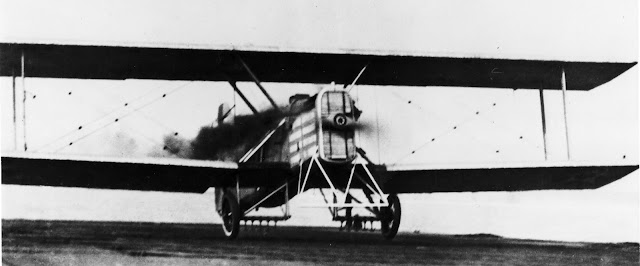
It was based on the Douglas World Cruiser, which the Army flew around the world in 1924. The major external changes were:
- Cut-down upper aft fuselage
- Rear cockpit moved aft
- Front cockpit opening larger and squared off
- New nose, vertical fin and rudder
- Recess in the bottom of the fuselage for mounting the torpedo
- No dihedral in the upper wing or center section cutout (there was also a fairing on the right hand inboard upper surface)
- Added cutout in the lower inboard wing to allow access to the cockpit when the floats were installed
- The horizontal tail was moved forward and enlarged accordingly
- Tailhook
- Initially, a propeller guard and hooks on the landing gear spreader bars to engage the longitudinal wires on the early arresting system
This is a pretty good drawing that I did back then from Douglas drawings provided to me by Harry Gann. Unfortunately, the tailhook is speculative. (Click on it for a larger and downloadable view.)
 The torpedo was probably the Mk 7, which was 17 feet long and 18 inches in diameter:

The Douglas DT-2 was one of the U.S. Navy's first torpedo bombers. It was operated as both a seaplane and from Langley as shown here.

It was based on the Douglas World Cruiser, which the Army flew around the world in 1924. The major external changes were:
- Cut-down upper aft fuselage
- Rear cockpit moved aft
- Front cockpit opening larger and squared off
- New nose, vertical fin and rudder
- Recess in the bottom of the fuselage for mounting the torpedo
- No dihedral in the upper wing or center section cutout (there was also a fairing on the right hand inboard upper surface)
- Added cutout in the lower inboard wing to allow access to the cockpit when the floats were installed
- The horizontal tail was moved forward and enlarged accordingly
- Tailhook
- Initially, a propeller guard and hooks on the landing gear spreader bars to engage the longitudinal wires on the early arresting system
This is a pretty good drawing that I did back then from Douglas drawings provided to me by Harry Gann. Unfortunately, the tailhook is speculative. (Click on it for a larger and downloadable view.)


Wednesday, October 3, 2012
F9F-2KD Regulus Controller Trainer
A Work In Progress
This airplane was used to train Regulus missile controllers. It was not a true drone since a pilot was required for takeoff and landing.


This airplane was used to train Regulus missile controllers. It was not a true drone since a pilot was required for takeoff and landing.

National Archives 80-GK- 23622

National Archives 80-GK-23623
Assigned to GMGRU-1. Pictures reportedly taken 29 June 1958 at Point Mugu.
Sunday, September 30, 2012
F-4 Sparrow Missile Orientation
According to pretty good McDonnell F-4J drawings, the Sparrows mounted under the fuselage were angled slightly from wings level.
In the front view, it is clear that the rear Sparrows are angled. Using Illustrator, I measured it at three degrees.

The forward Sparrows appear to be not angled as much in the above front view but close examination of the cross section at the location of the forward Sparrow's aft wings indicates that they are rotated the same three degrees as the aft Sparrows so the wings lie flat on the surface of the bottom of the fuselage.

In the front view, it is clear that the rear Sparrows are angled. Using Illustrator, I measured it at three degrees.

The forward Sparrows appear to be not angled as much in the above front view but close examination of the cross section at the location of the forward Sparrow's aft wings indicates that they are rotated the same three degrees as the aft Sparrows so the wings lie flat on the surface of the bottom of the fuselage.

Saturday, August 11, 2012
A-4F Laser Spot Tracker
From Scooter! plus subsequent information and illustrations:
The last carrier-based A-4s involved in the Vietnam War overlapped with the introduction of laser-guided bombs (LGBs). These were conventional bombs modified with a laser seeker, simple guidance computer, and controllable fins. The target was designated by a laser beam that the LGB could detect and home in on. The accuracy was outstanding, with the LGBs hitting within a few feet of the designated spot. The first laser-guided bomb drop at China Lake was made in early 1970, using a ground-based laser and a simple deviation meter in the cockpit of the A-4 carrying the bomb.
Since the Navy A-4s were in the process of being replaced, the implementation of laser designation capability was very limited. Some of the VA-164 A-4Fs deployed on Hancock with Air Wing 21 in 1973 were equipped with a Laser Spot Tracker (LST) in the nose and a Ferranti gun sight that displayed the spot being designated by a laser in another aircraft or by a person on the ground.


Via John Bittick
Six LWL units were fabricated and distributed to selected squadrons for combat evaluation, one of which was VA-164. To provide the designation capability, VA-164 borrowed two TA-4Fs configured with armor and ECM avionics from a Marine unit based at MCAS Iwakuni, Japan. These were reportedly BuNos 154325 and153491.

Note that VA-164 would also have had TA-4s assigned while shore-based for instrument proficiency, etc. like BuNo 152877. While it is shown here on a carrier, it doesn't have the ECM suite:

BuNo 154622 was another TA-4 assigned to VA-164, also side number 416.

Via John Bittick
The squadron Ordnance Warrant Officer and LDO Assistant Maintenance
Officer, both non-pilots, volunteered to be trained in the operation of
the LWLs and fly in the back seat on combat missions to provide
designation of the target while the pilot in the front seat circled it.
The pilot of an accompanying single-seat A-4 dropped a laser-guided bomb on the spot.

In spite of the limitations (the 8-pound weight of the LWL precluded the TA-4F pilot from pulling any g load if the guy in back was to hold the spot steady), the trial was a success. The TA-4F would precede a small strike group by 2 miles and search for targets of opportunity, flying at an altitude of 5,000 to 7,000 feet, which was above the effective range of small arms fire. When a suitable target was spotted, the TA-4F pilot would pull up and circle it at 10,000 feet while the observer would begin to designate it. Laser designation was also useful for attacks employing non-laser-guided munitions, since the pilots flying the LST-equipped A-4s could use the laser spot in lieu of smoke rockets or geographic references to locate the target that had been found by FACs.
The successful trial proved the validity of laser designation and the LST hardware for development and adoption in the final iteration of the Skyhawk.

In spite of the limitations (the 8-pound weight of the LWL precluded the TA-4F pilot from pulling any g load if the guy in back was to hold the spot steady), the trial was a success. The TA-4F would precede a small strike group by 2 miles and search for targets of opportunity, flying at an altitude of 5,000 to 7,000 feet, which was above the effective range of small arms fire. When a suitable target was spotted, the TA-4F pilot would pull up and circle it at 10,000 feet while the observer would begin to designate it. Laser designation was also useful for attacks employing non-laser-guided munitions, since the pilots flying the LST-equipped A-4s could use the laser spot in lieu of smoke rockets or geographic references to locate the target that had been found by FACs.
The successful trial proved the validity of laser designation and the LST hardware for development and adoption in the final iteration of the Skyhawk.
Subscribe to:
Posts (Atom)